What is ethics and compliance?
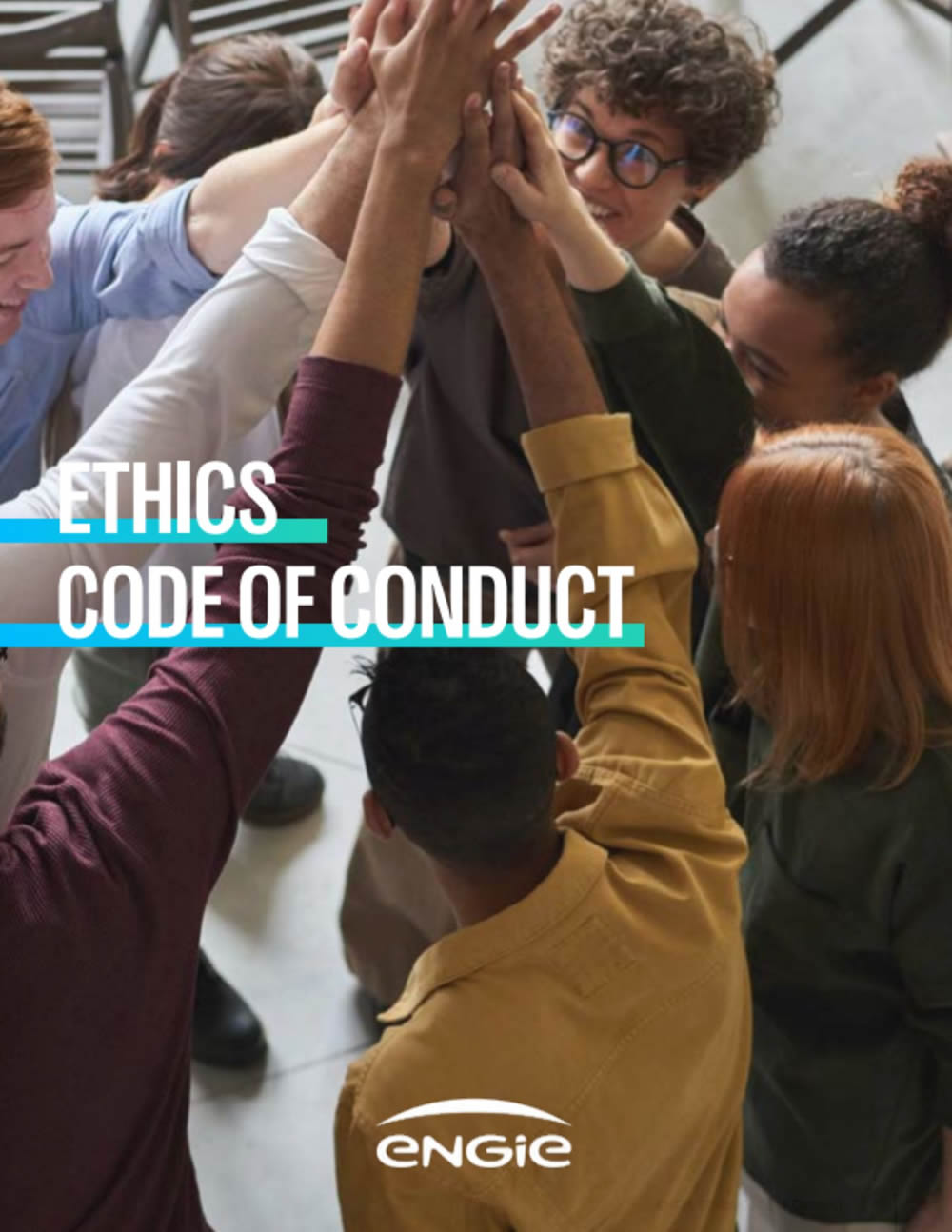
ENGIE’s Ethics Code of Conduct
ENGIE has adopted an Ethics Code of Conduct that outlines the ethics principles that each employee must follow as part of the business activities and professional practices, both toward colleagues and third parties.
The ENGIE Ethics Code of Conduct is
based on five fundamental principles:
- Corruption and fraud are strictly prohibited.
- Human rights must be respected.
- Environmental protection is a commitment that binds us.
- Laws and regulations apply to each of us.
- Integrity and loyalty guide our relationship with third parties.
Our ethics policies and procedures
To ensure and measure compliance with the principles laid out in ENGIE’s Ethics Code of Conduct, and in accordance with the requirements of several legislative and regulatory regimes, ENGIE provides the following tools and procedures:

Integrity and Fight against Fraud and Corruption
As part of the Integrity Referential, ENGIE has implemented ethical due diligence policies, which require investigating our third-party business partners (including material suppliers and subcontractors, commercial consultants, investment partners and beneficiaries of material sponsorships) to ensure that they do not represent any major ethics risks for ENGIE and that they are not in violation with any rules governing anticorruption, human rights, health and safety, and/or the environment.
ENGIE has also adopted a gifts-and-hospitality policy, as well as a conflict-of-interests policy, both of which aim to prevent any type of corruption or influence peddling and to ensure transparency through prior authorization and registration.
Vigilance Plan and Human Rights Commitments
In accordance with the French Duty of Vigilance Law, ENGIE has developed a Vigilance Plan that aims to identify and prevent the risks of negative impacts on people and the environment related to ENGIE activities around human rights, health and safety, and purchasing.
As part of the implementation of the Vigilance Plan and other international requirements, ENGIE is committed to respecting internationally recognized human rights in all our activities and wherever the business operates. To ensure the respect of our Human Rights commitments, we conduct regular risks analysis, which enables us to efficiently develop corrective-action plans. For more information, please refer to ENGIE’s Vigilance Plan.
In addition, ENGIE North America signed the Solar Energy Industries Association’s (SEIA’s) Forced Labor Prevention Pledge, joining more than 150 organizations in opposing forced labor within the solar industry supply chain.
Finally, in accordance with the Canadian Fighting Against Forced Labour and Child Labour in Supply Chains Act, effective since January 1, 2024, ENGIE Canada submits a report to the Canadian Minister of Public Safety detailing the steps that ENGIE Canada has taken during its previous financial year to prevent and reduce the risk of forced labor and child labor in its supply chain.

Compliance Referential
- The annual ethics report procedure, which ensures that all legal and regulatory requirements, as well as all voluntary commitments taken by ENGIE regarding ethics and compliance are respected. All ethics and compliance officers must produce an annual report of progress of their entity and a compliance letter from the entity director certifying its responsibility and commitment to applying the ethics program throughout the organization under his/her responsibility.
- The managerial reporting system for ethics incidents which includes an obligation for entities, businesses, and functional lines of ENGIE to report into the tool named “My Ethics Incidents”, any suspected ethics incidents as soon as they come to their knowledge. The “My Ethics Incidents” tool allows the tracking of the treatment of each incident until it is closed. Thorough knowledge of ethical incidents and their treatment helps to prevent ethics risks and implement corrective measures.

Complementary Codes of Conduct

Whistleblowing
ENGIE has established confidential and anonymous whistleblower systems for the receipt, retention, and treatment of complaints.
Whistleblowing reports can be made by ENGIE employees or any external stakeholders, including suppliers, subcontractors and their respective employees, members of the community, etc.
Reports can address concerns around any issue related to corruption, human rights violations, fraud, breach of personal data privacy rules, harassment, discrimination, violations of international sanctions and embargoes, health and safety risks, environmental damage, or — more broadly — violations of applicable law or regulations regarding conduct subject to criminal punishment, as well as any violations of ENGIE’s Ethics Code of Conduct.
To report an incident, please use one of the following methods:
ENGIE’s comprehensive approach includes: